Oh The Lessons We Learn...
Too much of a good thing is still, too much.
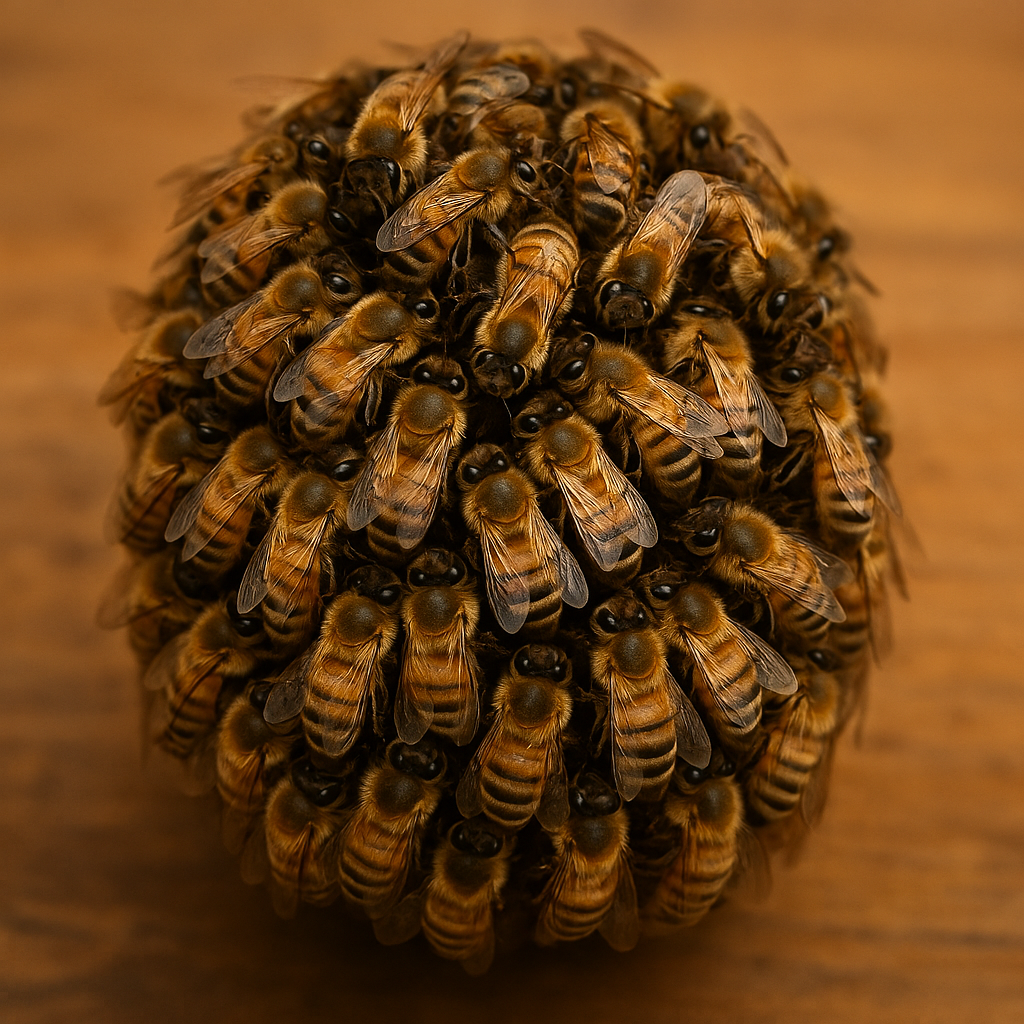
As Pretty as this image is
I don’t think it’s what I had in mind for the end of my hive inspection.
It started like a dream.
A textbook inspection of my new colony—the one from the swarm trap I’d set weeks ago. Foundation drawn clean. Bees working the frames like they’d been trained by a textbook editor. Eggs, larvae, capped brood—all in perfect harmony. You could trace the developmental stages like a painter stepping back from a canvas. It wasn’t just good—it felt correct. As if nature had glanced over my setup and given a quiet nod of approval.
There are days as a first-year beekeeper when everything feels like guesswork. This wasn’t one of them.
The colony was vibrant, engaged. They were drawing comb on the foundation I’d given them, placing nectar in fresh cells, and tending brood across multiple stages. It was a full biological spectrum on display, quiet and industrious. These were bees that had found their rhythm. And for a few moments, I got to bask in it.
But the inspection didn’t end there. I had another hive to visit—the older one. The more… temperamental one.
This colony had always been a bit spicy with me. Not unmanageable, but they didn’t suffer fools—or slow-moving humans. Just a couple weeks back, they’d gifted me about five gallons of honey. They were still working hard, too. I’d placed a single super back on top and they’d promptly repaired and cleaned the comb. These bees weren’t sluggish. They weren’t passive. They were doing the work.
So I approached them differently.
This time, I decided to use smoke.
I hadn’t leaned on it much before—maybe a puff or two here and there—but something about the day made me reach for it. It was like my subconscious whispered, don’t go in bare-handed this time. And maybe it was right. But maybe it wasn’t.
With a few puffs of smoke, I began the inspection. Super first: nectar going back in, not dripping but meaningful. The resource flow was active. Down in the top brood box, things looked strong. Eggs. Larvae. Even patterns of capped brood that were so neat, I found myself narrating a mental timeline.
One frame had clearly been cleaned post-emergence, ready for the queen’s return. Another held capped brood that had to be around twenty days old. Then a frame with eggs, larvae, and developing brood all at once. It was like reading her diary in wax.
Still, no queen.
I’ve never seen her in this hive—not once since I got it. Always inferred, never observed. But I saw her work. And I’ve always felt that seeing her trail was enough.
Still, it would’ve been nice to see her. Just once.
I moved the last box aside, did a final check, and prepared to close up. My last step was to reduce the entrance. With honey flow picking up and a second hive added to the apiary, I wanted to make sure everyone could defend what’s theirs. Especially with this more assertive colony.
So I puffed a bit of smoke toward the entrance—and that’s when I saw it.
A tight ball of bees.
My first thought? Maybe a wasp snuck in. Or maybe they were pushing out a drone. It looked foreign. Off. I gave another light puff and watched them scatter. Then I realized…
They weren’t surrounding an intruder.
They were surrounding her.
My queen.
Wrapped in workers, partly obscured, and only revealed after the smoke drifted. She took careful, slow steps back toward the entrance. But in those final moments, I saw something I can’t quite shake:
Her back leg.
It might’ve been dragging.
Was it injury? Confusion from the smoke? A failed attempt to abscond? A protective circle? I don’t know. But I do know that my moment of awe—seeing her for the first time—was immediately colored by fear.
Had I caused this?
Did the smoke disrupt her pheromones, make the hive mistake her for something else? Did they ball her out of instinct or warning? Or was she on her way out, only to be pulled back in?
I saw eggs. Resources. Everything looked normal. But now I’ll wait. Three to five days, and I’ll inspect again. If the colony’s chosen a different path—queen cells, emergency signs, or worse—I’ll find out soon.
But until then, I’m letting silence do the talking.
Too much of a good thing really might be too much.
And the hive never forgets.